

Swipe Right on Codex, Neeee-igh!
Codex (OpenAI's coding agent) has long been quite good at writing mobile code.
It just never got the opportunity to see the app that it was writing.
On October 2, Callstack and Margelo launched Mobile Dev.
A plugin which places live iOS and Android devices right beside the Codex desktop chat.
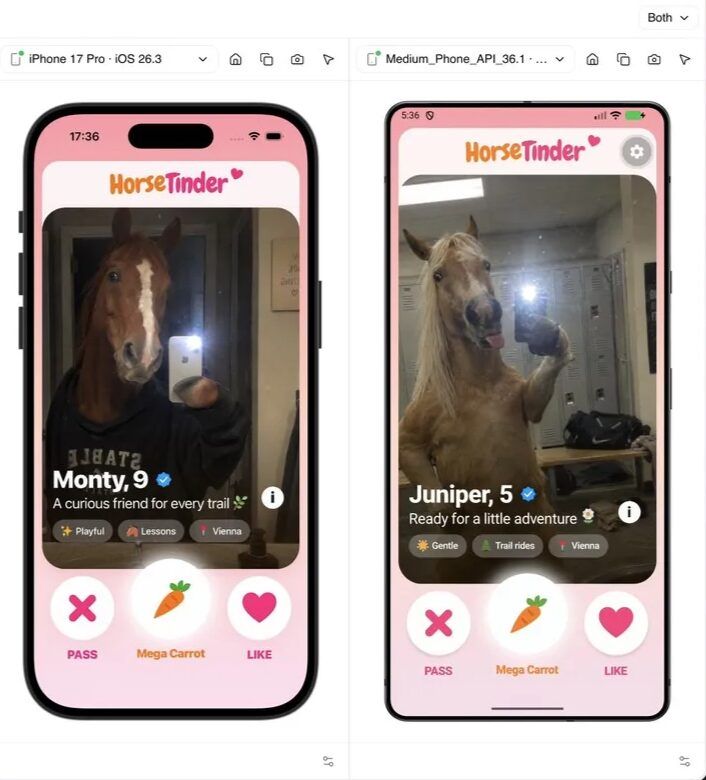
That's Monty, aged 9, on the iPhone simulator and Juniper, aged 5, on the Android emulator, both of them on a demo dating app known as HorseTinder.
We won't inquire as to why horses need a dating app…
We have seen weirder things at this point.
Monty is taking a mirror selfie in a hoodie, so really he's doing better than most of us.
So what can Codex do with a device?
It can boot simulators and emulators, tap, drag and type, and read the accessibility tree using MCP tools (Model Context Protocol, the standard method for agents to call tools; at some point we should asume you already know this… maybe today xd).
You can also click on any item on the screen and leave a note, which in React Native apps, includes the component together with its source file.
Here, someone selects the Super Like star and requests a "Mega Carrot" in orange.
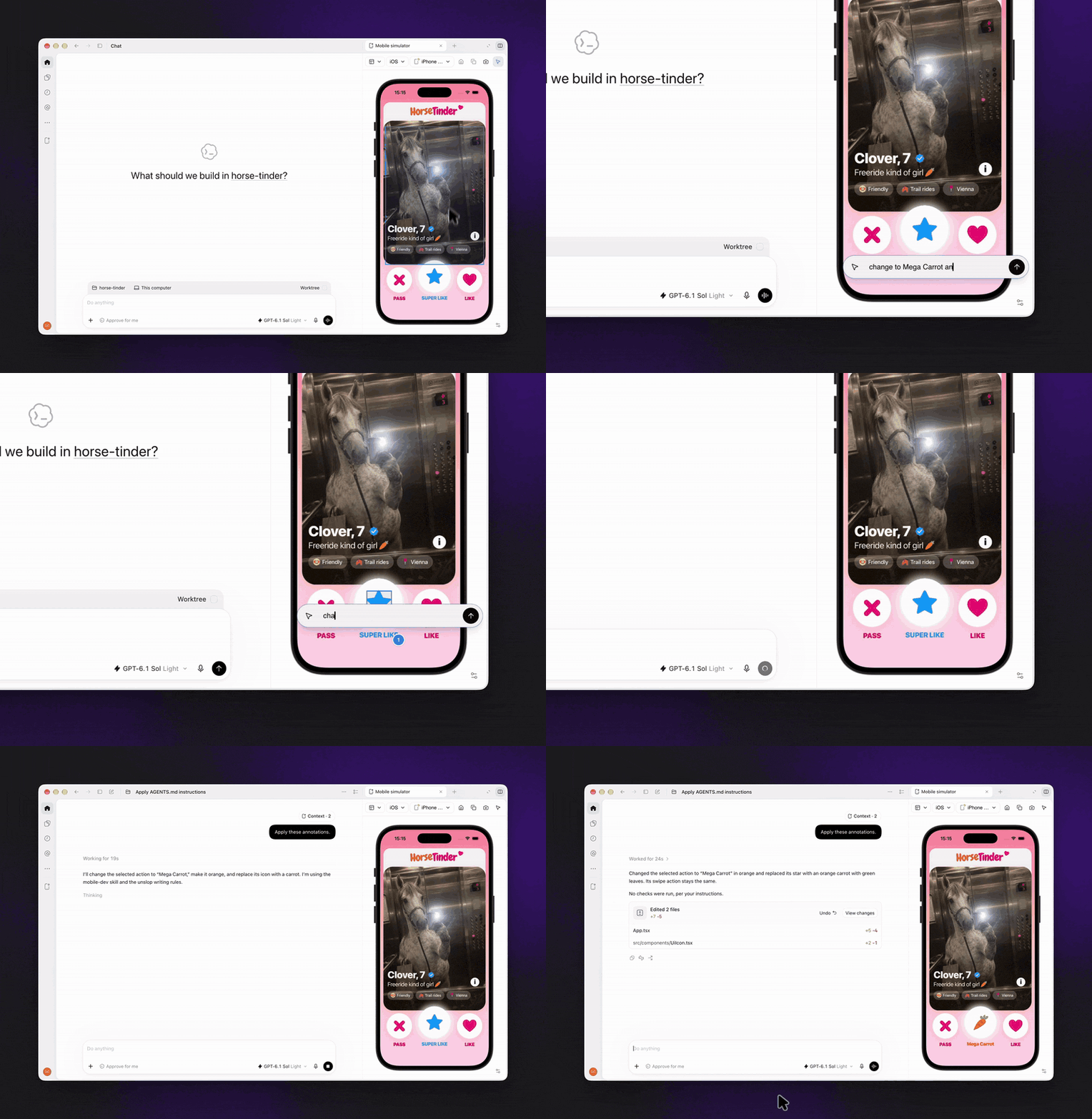
Codex makes edits to two files, so the star becomes a carrot…
And Monty is presumably able to attract a better sort of match.
What happens when it crashes?
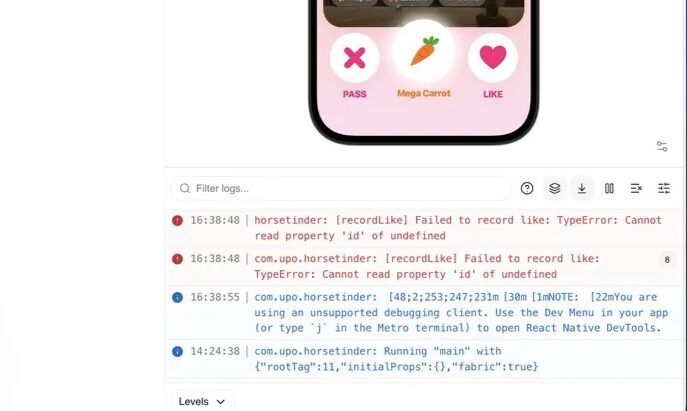
Metro's console, iOS unified logs, Android logcat all end up in a single panel, and an error can be sent directly to the chat.
And performance?
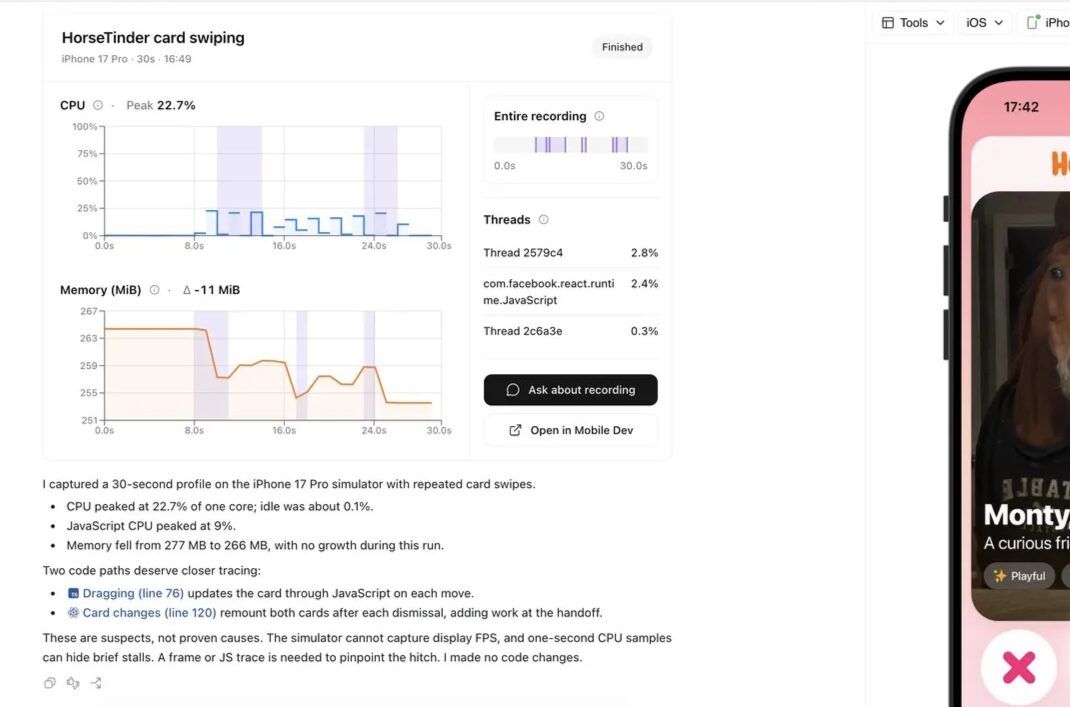
Ask it to record an interaction and it will capture the CPU and memory, then draw the charts directly in the chat. The image below shows 30 seconds of card swiping on an iPhone 17 Pro simulator, with the CPU reaching a peak of 22.7%.
How do you get it?
You need the Codex desktop app on an Apple Silicon Mac, plus Xcode 26 or later (Xcode 27 if you want to use physical iPhones).
# Add Callstack's marketplace, pinned to the release branch GH=https://github.com/callstackincubator codex plugin marketplace add \ $GH/codex-mobile-dev-plugin.git --ref release/latest codex plugin add mobile-dev@mobile-dev
It is based on MCP Apps and on the plugin extensions that OpenAI announced at DevDay.
And it will soon be available on the Codex plugin marketplace.
Monty has still not found love…
But now anyone who swipes right on him is going to get the Mega Carrot.

Ay-oh, Another One Bites the Dust
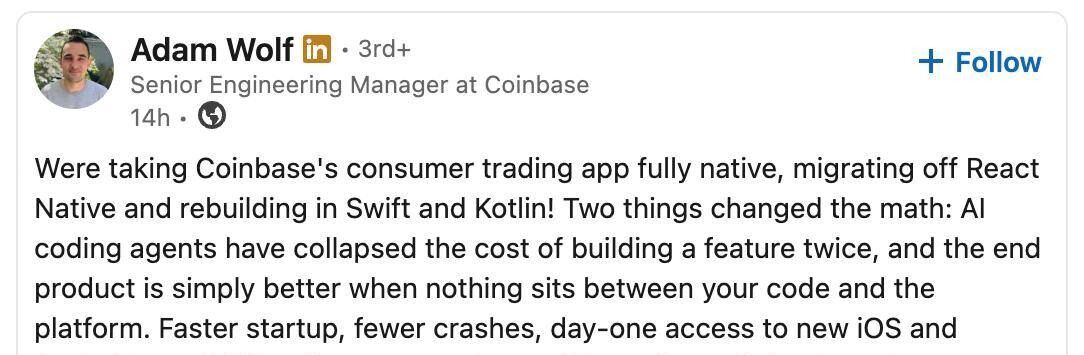
Coinbase is pulling out of React Native after 5 years.
Coinbase is also paying engineers to keep the React Native app in sync until the Swift and Kotlin apps are ready...
So Coinbase is pulling out very slowly, which any SexEd teacher will tell you doesn't count.
Adam Wolf, a Senior Engineering Manager there, says AI coding agents have "collapsed the cost of building a feature twice".
While one tenant packed boxes, another moved in.
Ashley Hunter (@ashh640) launched Angular Native on September 29.
Angular apps that draw as real UIView and android.view.View.
It’s built on Expo and React Native’s New Architecture…
Wait… What!?
Angular’s Renderer2 (the layer that draws somewhere other than the browser DOM) feeds a small engine, @ng-native/fabric, which talks straight to Fabric (React Native’s C++ view renderer).
Svelte (a UI framework that compiles your components into plain JavaScript at build time, so there’s no virtual DOM runtime like React) shows up in the diagram below too…
We’ll get to it in a minute.
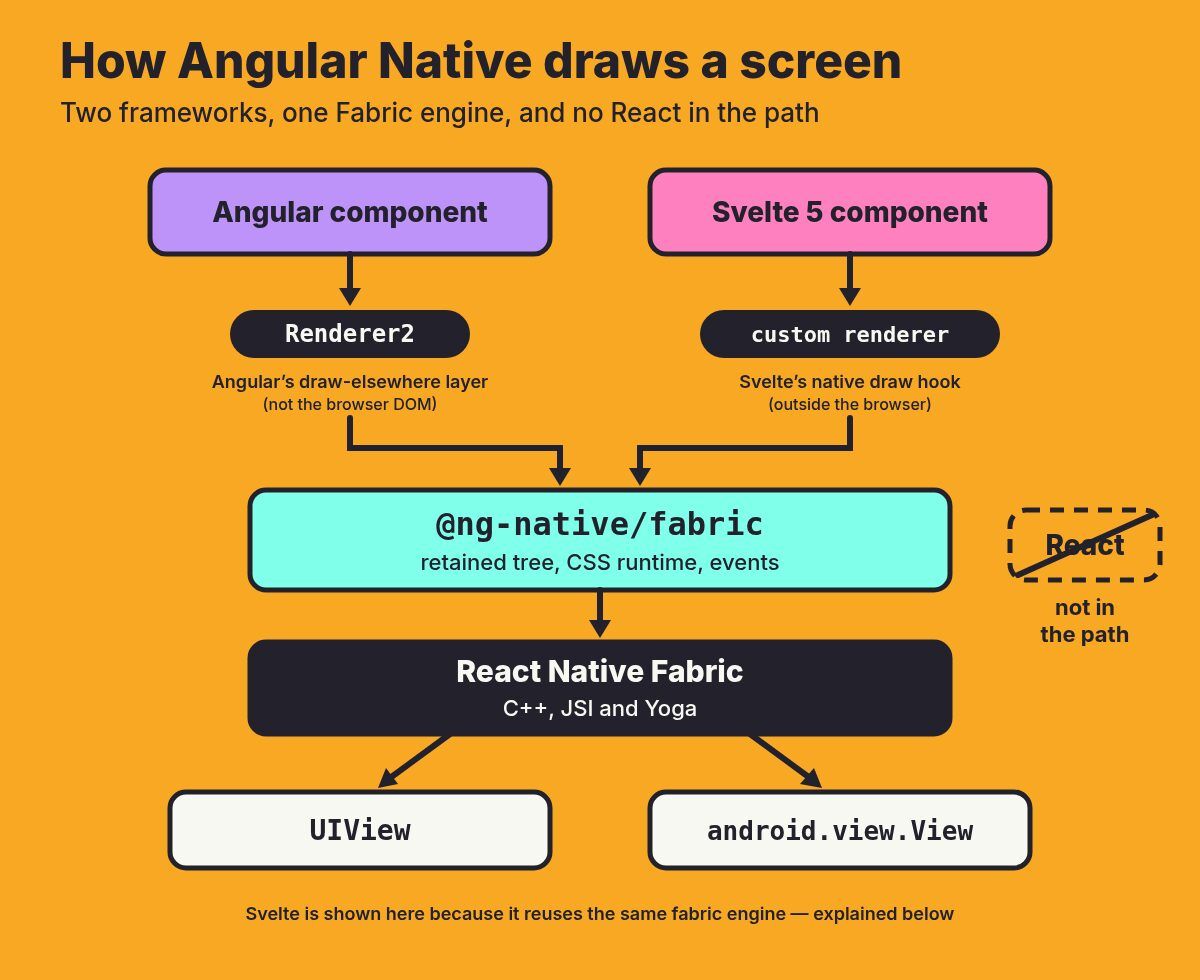
You write ordinary Angular templates with <view>, <text>, and <pressable>, which output real React Native views, styled with real CSS and Tailwind (ios: / android: variants).
And Angular isn’t the only unexpected guest at Lord Fabric’s table.
Svelte isn’t “based on React Native” either…
But @wobsoriano hooked Svelte 5’s custom renderer into that same @ng-native/fabric engine.
So Svelte ALSO gets real native views without writing its own Fabric bridge.
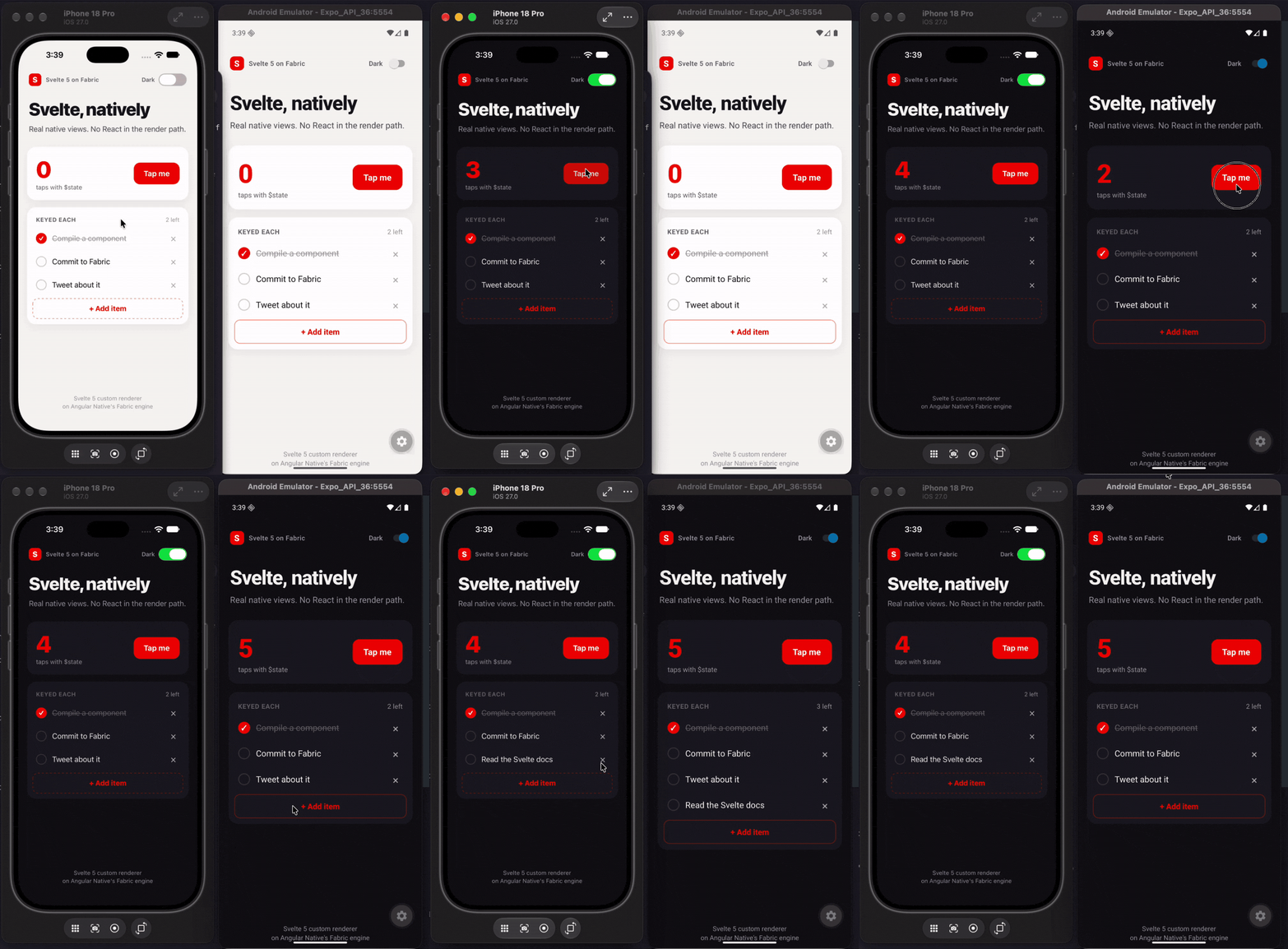
That means… drum roll…
Angular and Svelte can use Expo modules.
Think… camera, notifications, file system, haptics, blur, image picker, audio…
React Native is quietly becoming the native layer under everyone else’s frontend.
Now the old king is dead!

The third RC bumps Hermes to kill a quadratic slowdown in lazy compilation, and stops SwiftPM autolinking from recreating library packages on every sync... which was quietly breaking Xcode for libraries that ship their own Package.swift.
📦 Lynx 4.0
ByteDance's framework now adapts to foldables like the iPhone Duo, understands CSS media queries, and open-sources a Liquid Glass blur view plus a WebView... and despite the big version number, nothing breaks.
📦 Lucent
Write native modules in TypeScript, compile them to C++ via JSI, and skip Swift or Kotlin entirely... with an experimental mode that turns JSX into SwiftUI and Jetpack Compose, which is either the future or a very elaborate dare.
Satyajit Sahoo (@satya164) added tabBarRepeatedPressBehavior for when you tap the tab you're already on: scroll to top, pop the nested stack, or both... and the same option landed in the v8 alpha too.
Stability fixes for layout animations and shared element transitions, a handful of Android crashes, and sync prop updates that stop snapping back when a sibling's zIndex shuffles the deck.
Microsoft synced react-native-macos with React Native 0.83.10, the first 0.83 for Mac... desktop is only four versions behind, which for desktop counts as keeping up.
Tomasz Sapeta (@tsapeta) added generate-types, which writes TypeScript types for your Expo module straight from its Swift... so they come from what native actually exports, not what you remember.
eas simulator --network-capture records HTTP traffic on Expo's cloud simulator (headers and bodies optional), and since 24.9 eas update --upload-source-maps means OTA stack traces finally point at real lines.
📦 Apex
Callstack's React Native coding model is generally available after a stealth run as Pixel Canary on Vercel AI Gateway... $0.50/M input and $3/M output, so your agent can afford a few more retries before lunch.
📦 expo-meta-wearables-dat 2.2.0
The first React Native wrapper for Meta's Wearables Device Access Toolkit 1.0 for smart glasses... Meta says experimental features can't be published yet, so you can build for the glasses, you just can't ship.
📝 Live Activities with Expo, End to End
Expo walks through a Live Activity that tracks a receipt from TSX widget to APNs pushes... favourite gotcha: send state in the wrong shape and Apple replies 200 OK, then never updates the activity.